These little guys began appearing in bakeries just about a week ago. I thought they were so cute that I picked one up.
It turns out that the Weckmann is an old Advent tradition, a gift for Catholic children during the feast of St. Martin on November 11. Today, they're sold all throughout the Advent season (and quite a bit before, much like Christmas music hits the stores a good month before the actual date). Apparently, the figures originally held crosses, but it gradually morphed in to a pipe. Sadly, this guy was cuter than he tasted, but I still enjoyed learning about another German food tradition!
Thursday, October 10, 2013
Monday, October 7, 2013
Word of the Week: das Tor
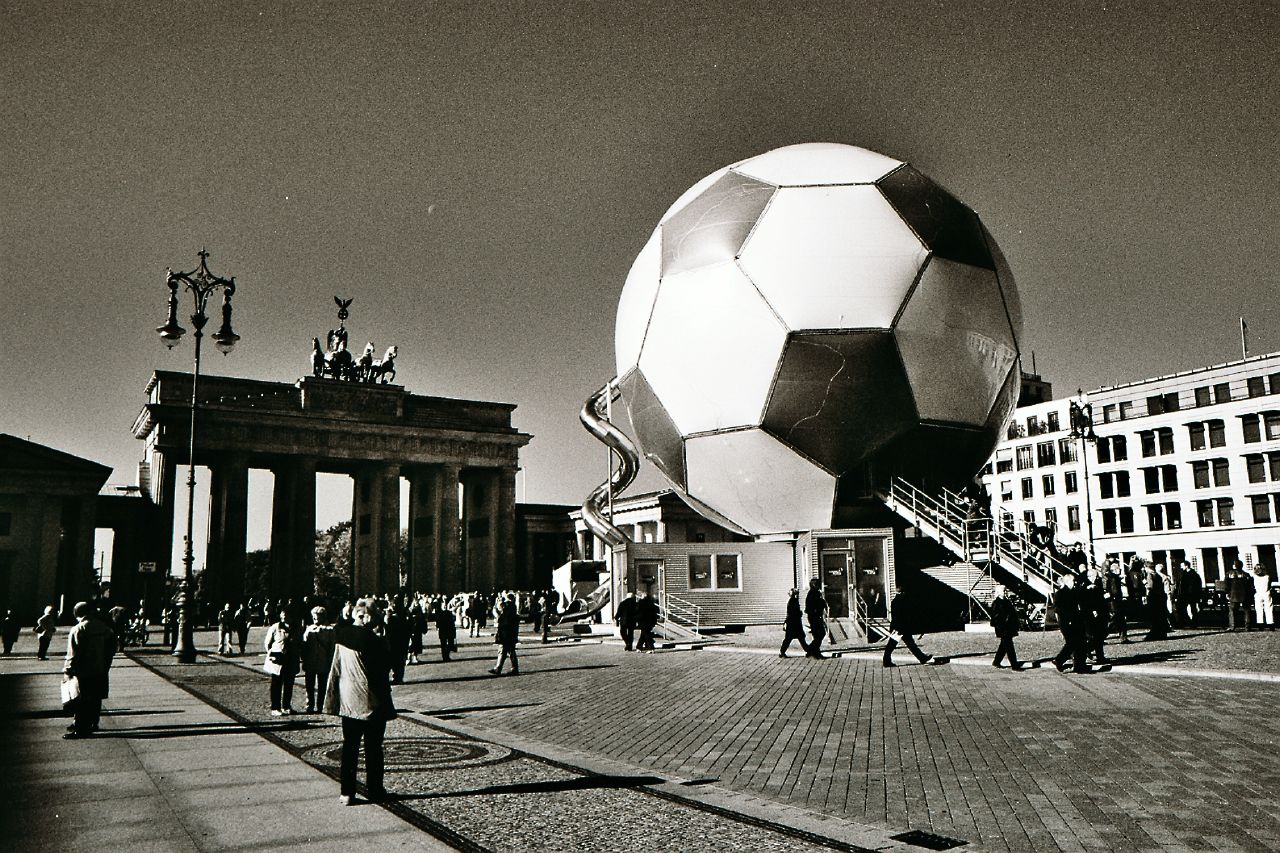
The German word, das Tor, refers to several things. Firstly, a gate.
Secondly, das Tor refers to a soccer goal.
There are some jokes about this dual meaning, but it (sort of) makes sense.
We finally went to a Bundesliga soccer (aka, Fußball) game the other day. We watched Bayer Leverkusen (owned by the Bayer aspirin company) beat Hannover 96, 2:0. Going to a big soccer game has been on our 'must do' list, and we had a great time. My favorite part was watching the home team super-fan section led by the Ultras.
Another fun tradition: when the home team players are announced at the beginning, the announcer says only the first name and the fans yell the last name. And when someone on the home team makes a goal, the entire stadium chants his last name! I wonder how the player feels when he hears 25,000 people chanting his name?
My next goal is to get to an FC Köln game--I want to see the mascot, Hennes the Goat, in person!
P.S. This video made me laugh, and I bet you'll get the joke, too :)
![]() |
| clockwise from left: Rödertor in Rothenburg ob der Tauber; castle gate in Cochem, the Brandenburger Tor in Berlin, and an old gate into Bacharach |
| source |
| source |
![]() |
| huge flags, an incredible giant banner (aka, tifo), and perfectly synchronized chants (click for a better view) |
My next goal is to get to an FC Köln game--I want to see the mascot, Hennes the Goat, in person!
P.S. This video made me laugh, and I bet you'll get the joke, too :)
Thursday, October 3, 2013
Ausflug: Tuchfabrik Müller, Euskirchen
While J was away at a conference a few weeks ago, I decided to check out one of the museums along the Ruhr Industrial Heritage Trail (Route der Industriekultur). The trail includes a drop forge, paper mill, textile mills, zinc factory, coal mines, and other types of factories in the region. The Tuchfabrik Müller (Müller's Woolen Mill) is an early 20th century mill, which processed the raw wool and made beautiful fabric for uniforms. It originally was a paper mill, but the Müller family bought it in 1894 and produced fabric up until the 1960s. In the 1980s, it was bought by the government and restored, and now it's a really wonderful museum.
The mill is only an hour train ride from our apartment, so it was a perfect day trip. Group tours are the only way to see the it, so I planned my arrival to coincide with the 4pm tour. Before it began, I read an English translation of the tour, which was really helpful for technical words such as Krempelei (carding) and Nassappretur (washing and finishing the fabric). The tour was conducted in German, but I caught about 80% of it and really enjoyed it. Aside from the translation, the other reason I understood so much of the tour is that every single room had working machines and demonstrations!
The tour began in the steam-engine (Dampfmachine) room, with huge coal furnaces and a web of belts connecting the engine to machines throughout the building. It smelled just like my Grandpa Lewis's shop, a mix of old wood, grease, and dust (in other words, wonderful). Later, we saw a model of the entire mill's power transmission system, which showed the intricate connections of the machines' belts to the main steam engine. To turn machines on and off, the belts were slipped onto a wheel connected to the main power, which caused the belts to turn and the machines to run. Such a clever system!
The carding room (Krempelei) was next. Rollers covered in small, metal bristles were attached to a series of rotating wheels. The wool enters at the front and goes through these wheels, coming out as pillowy sheets that you can pull apart with your fingers like a layered buttermilk biscuit.
Once the wool is soft and carded, it's spun into yarn on long lines of spinning machines. From there, the spindles are attached to a clever contraption that in turn makes giant spools. Different colors of yarn are lined up to produce a particular pattern on the spool.
These huge spools are then brought over to the weaving machines (Webstühle), where the cloth is finally woven. This was one of my favorite demonstrations. Once the machines are loaded with huge spindles of wool, a heavy wood and metal shuttle loaded with more wool runs across the strands to weave the fabric. This video explains how it works, though these were mechanized looms without pedals or the 'flicker stick.' The shuttles travel very fast, and there were deep gauges all along the walls where the shuttles had come loose and smashed into the plaster! The noise was overpowering, and we only had half the machines running.
I think I particularly enjoyed this museum because it was so beautiful, with the textures and colors of the well-worn wood, metal, leather, and wool in every room, and the smells of the machines bringing back memories of cold afternoons in Pa's shop. I also loved seeing the machines run. It gave me a whole new appreciation for the ingenuity of machines during the Industrial Revolution as well as the sheer volume of fabric that must have come out of the Manchester mills around the same time!
The mill is only an hour train ride from our apartment, so it was a perfect day trip. Group tours are the only way to see the it, so I planned my arrival to coincide with the 4pm tour. Before it began, I read an English translation of the tour, which was really helpful for technical words such as Krempelei (carding) and Nassappretur (washing and finishing the fabric). The tour was conducted in German, but I caught about 80% of it and really enjoyed it. Aside from the translation, the other reason I understood so much of the tour is that every single room had working machines and demonstrations!
The tour began in the steam-engine (Dampfmachine) room, with huge coal furnaces and a web of belts connecting the engine to machines throughout the building. It smelled just like my Grandpa Lewis's shop, a mix of old wood, grease, and dust (in other words, wonderful). Later, we saw a model of the entire mill's power transmission system, which showed the intricate connections of the machines' belts to the main steam engine. To turn machines on and off, the belts were slipped onto a wheel connected to the main power, which caused the belts to turn and the machines to run. Such a clever system!
From there, we saw the willowing room, where the wool is taken out of bales and run through a machine with big rollers of teeth -- rough wool goes in and light fluffy wool comes out of the overhead shoot like snow. The German word for this room is Wolferei, which I suppose refers to all those teeth in the machine!
We walked past belt-powered washing machines made out of tree trunks and huge dying vats, with the dye recipe written on the door nearby.The carding room (Krempelei) was next. Rollers covered in small, metal bristles were attached to a series of rotating wheels. The wool enters at the front and goes through these wheels, coming out as pillowy sheets that you can pull apart with your fingers like a layered buttermilk biscuit.
Once the wool is soft and carded, it's spun into yarn on long lines of spinning machines. From there, the spindles are attached to a clever contraption that in turn makes giant spools. Different colors of yarn are lined up to produce a particular pattern on the spool.
These huge spools are then brought over to the weaving machines (Webstühle), where the cloth is finally woven. This was one of my favorite demonstrations. Once the machines are loaded with huge spindles of wool, a heavy wood and metal shuttle loaded with more wool runs across the strands to weave the fabric. This video explains how it works, though these were mechanized looms without pedals or the 'flicker stick.' The shuttles travel very fast, and there were deep gauges all along the walls where the shuttles had come loose and smashed into the plaster! The noise was overpowering, and we only had half the machines running.
![]() |
| the loom on the left was making plaid fabric rather than stripes: the red and white stripes were crossed by green yarn on the shuttle |
Monday, September 30, 2013
Fat Cat Gets a Passport
In preparation for our flight back to the US in December, Sam got a passport. This is not a sign of us going over the deep end--we're flying out of Paris, and all pets in the EU are required to have a pet passport for cross-border travel, so 38 Euros later Sam is now in the system :) And according to the system, she is a German cat!
The vet around the corner from our house filled it out using Sam's US paperwork--all of the vets and assistants dropped by the exam room to see her interesting American records. I was much more impressed with the EU-Pass, though. (Side note: Although the front says 'Heimtierausweis', the Germans just refer to it as der EU-Pass (said 'eh-oo pass'). This was yet another give-away that I'm not a native speaker, if the accent and moderately poor grammar didn't make it clear!) The passport includes pages for identifying information (owner, breed and coloring, microchip number and injection site) as well as vaccinations. There are also pages for health certifications, which is a great improvement over the pages and pages of certified documents that were required to get her over here! The passport lasts the lifetime of the animal, so as long as we keep it updated Sam can travel in the EU again with (theoretically) less hassle.
Saturday, September 28, 2013
More Fun with Johannisbeeren
I promised another Johannisbeeren (aka, fresh currant) recipe, and this one is a winner. I picked this recipe because it's very similar to what's often sold in bakeries and it includes another of our favorite German ingredients, quark.
Quark is a type of fresh cheese, with a consistency between sour cream and cream cheese. It's a bit sweeter than sour cream, but not as thick as (and a bit drier than) cream cheese. We most often see it in desserts like cheesecake and custard, but it's also used to make bread, spreads, dips, and more. For anyone who can't find quark, I have heard that Greek yogurt or drained yogurt are decent substitutes. For this recipe, I think sour cream would work well in the base and cream cheese would work for the filling, but the only way to know for sure will be to do extensive testing once we're back in the States. :)
The recipe looks much more complicated than it actually is--it comes together in about an hour. And, anyway, it is worth the effort!
Quark is a type of fresh cheese, with a consistency between sour cream and cream cheese. It's a bit sweeter than sour cream, but not as thick as (and a bit drier than) cream cheese. We most often see it in desserts like cheesecake and custard, but it's also used to make bread, spreads, dips, and more. For anyone who can't find quark, I have heard that Greek yogurt or drained yogurt are decent substitutes. For this recipe, I think sour cream would work well in the base and cream cheese would work for the filling, but the only way to know for sure will be to do extensive testing once we're back in the States. :)
Johannisbeer-Quarkkuchen
original recipe
Base
1/4 cup (150g) quark
6 tablespoons milk
6 tablespoons oil
1/3 cup (75g) sugar
2 t (1 packet) vanilla sugar
pinch salt
2 1/2 cups (300g) flour
3 3/4 teaspoons (1 packet) baking powder
1. Mix the quark, milk, oil, sugar, vanilla, and salt. In a separate bowl, mix the flour and baking powder.
2. Mix half of the flour mixture into the quark mixture until almost combined, then add in the rest of the flour and gently mix til fully combined.
3. Dump the dough into a greased baking dish (11x7 or 13x9) and gently pat it down til it's evenly spread.
Topping
~2 c (750g) fresh currants
1 cup (750g) quark
1 cup (200g) sugar
1-2 teaspoons (1 packet) vanilla sugar
3 eggs
2 eggs, yolks and whites separated
4 T (50g) butter, soft or melted
1/2 cup minus 2 tablespoons (50g) cornstarch
1/3-1/2 cup (100g) sugar
slivered almonds to cover the top (20g)
1. Mix the quark, 1 c sugar, vanilla, 3 whole eggs, 2 egg yolks, and butter til smooth. Then mix in the cornstarch and stir til smooth and thick.
2. Wash and dry the currants, and remove them from their stems. Mix the berries with the quark mixture.
3. Dump the berry-quark filling onto the base and spread it til smooth.
4. Bake at 400F/200C for 25-50 minutes, or until the center isn't too jiggly. (My pan was a bit small, so the filling was thicker and thus needed to cook longer.)
5. While the filling is baking, whip the 2 egg whites until very stiff. Then gently fold in the sugar.
6. Remove the pan from the oven and (while it's hot) spread the egg whites evenly over the top. Then sprinkle slivered almonds over the top of that, using enough almonds to almost completely cover the egg whites.
7. Bake at 400F/200C for another 5 minutes or until the almonds are toasted.
| I made a half recipe, which fits in the equivalent of a 8x8 or 9x9 pan |
Subscribe to:
Posts (Atom)